Hayavadana
Identity, Incompleteness, and the Search for Wholeness: A Critical Reading of Hayavadana
Introduction
Girish Karnad’s Hayavadana is one of the most significant works in modern Indian drama. Written in 1971, the play combines Indian myth, folklore, and modern existential concerns to explore profound questions about identity, completeness, and human desire. Drawing inspiration from ancient stories like the Kathasaritsagara and Thomas Mann’s retelling in The Transposed Heads, Karnad creates a uniquely Indian theatrical experience.
This blog offers a detailed and critically enriched analysis of Hayavadana, examining its themes, characters, structure, symbolism, and philosophical depth in clear and accessible language suitable for postgraduate study.
Context and Background
Hayavadana emerges from the post-independence Indian literary context, where writers were grappling with questions of identity, tradition, and modernity. Karnad blends traditional Indian theatre forms (like Yakshagana and folk performance) with modern dramatic techniques.
The play is structured as a “play within a play,” introduced by a Bhagavata (narrator), which reflects classical Indian dramaturgy and creates a performative, self-aware theatrical space.
Plot Summary
Beginning: Love and Friendship
The play begins with two close friends:
Devadatta – intelligent and intellectual
Kapila – strong and physically attractive
Devadatta falls in love with Padmini and marries her. However, Padmini is secretly attracted to Kapila’s physical strength.
Middle: Conflict and Transformation
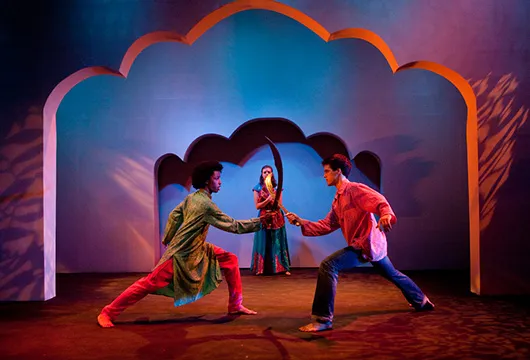
During a journey, Devadatta becomes insecure about Padmini’s attraction to Kapila. In a moment of emotional turmoil, he sacrifices himself at a temple, and Kapila follows him out of loyalty.
Padmini, desperate to save them, receives a divine instruction to reattach their heads—but she mistakenly swaps them:
Devadatta’s head on Kapila’s body
Kapila’s head on Devadatta’s body
This leads to a philosophical debate: Who is the real husband—the one with the head or the one with the body?
Subplot: Hayavadana’s Story
Parallel to the main plot is the story of Hayavadana, a man with a horse’s head who seeks completeness. Ironically, when he becomes fully a horse, he loses his human voice, raising questions about identity and fulfillment.
Ending: Tragic Resolution
The conflict between Devadatta and Kapila continues, leading to their deaths. Padmini performs sati (self-immolation), leaving behind her child.
The play ends with the child and Hayavadana, suggesting an ambiguous resolution about identity and completeness.
Major Themes
1. Identity and the Mind-Body Problem
Devadatta (head) represents intellect
Kapila (body) represents physical strength
The head-body exchange creates confusion, showing that identity is not fixed or simple.
2. Incompleteness and the Human Condition
All characters in the play are incomplete:
Devadatta lacks physical strength
Kapila lacks intellectual refinement
Padmini desires both
Even Hayavadana seeks completeness but finds it in an unexpected and ironic way.
3. Desire and Conflict
Padmini’s desire for both intellect and physical strength creates tension. The play shows that human desires are:
Complex
Contradictory
Often unattainable
4. Tradition vs. Modernity
The play combines:
Ancient myths
Modern existential questions
This reflects the conflict between tradition and contemporary thought.
5. Illusion vs. Reality
The play questions what is real:
Is identity physical or mental?
Can completeness ever be achieved?
Characters Analysis
Devadatta
Devadatta represents intellect, sensitivity, and emotional depth. However, his insecurity leads to tragedy.
Kapila
Kapila symbolizes physical strength and natural vitality. He is more grounded but also emotionally vulnerable.
Padmini
Padmini is a complex character who challenges traditional female roles. She represents desire, curiosity, and dissatisfaction.
Hayavadana
Hayavadana symbolizes incompleteness and the absurdity of human existence.
Bhagavata
The narrator who connects the audience with the story, blending traditional storytelling with theatrical performance.
Symbolism
1. The Head and Body
The head symbolizes:
Reason
Identity
Consciousness
The body symbolizes:
Desire
Physicality
Instinct
2. Hayavadana (Horse-Man)
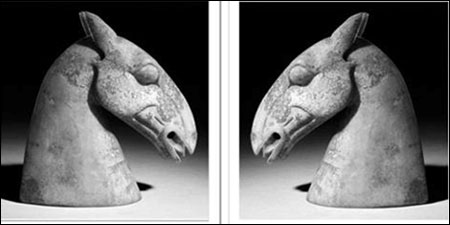

Hayavadana represents:
Fragmented identity
The search for completeness
The absurd nature of existence
3. Dolls (in the play)
The dolls act as commentators, reflecting inner thoughts and adding a symbolic layer.
Structure and Dramatic Technique
1. Play Within a Play
The Bhagavata introduces and comments on the story, creating a layered narrative.
2. Use of Folk Elements
Karnad incorporates:
Songs
Masks
Storytelling
These elements connect modern drama with traditional Indian theatre.
3. Non-Realistic Elements
The play includes:
Talking dolls
Supernatural transformations
This adds a symbolic and philosophical dimension.
Language and Style
The language is:
Simple yet symbolic
Blends classical and modern tones
The dialogue reflects both emotional depth and philosophical inquiry.
Philosophical Dimensions
1. Existentialism
The play reflects existential concerns:
Search for identity
Meaning of existence
Human incompleteness
2. Indian Philosophy
The idea that the head determines identity aligns with certain philosophical traditions, but Karnad questions this certainty.
3. Absurdity of Life
Hayavadana’s transformation highlights the absurd nature of human desires.
Critical Perspectives
1. Feminist Reading
Padmini challenges traditional gender roles but is also trapped by societal expectations.
2. Psychoanalytic Approach
The play explores unconscious desires and inner conflicts.
3. Postcolonial Perspective
It reflects India’s struggle between tradition and modern identity.
Relevance in the Modern World
The play remains relevant because:
Identity crises are common today
People struggle with self-definition
The idea of completeness is still questioned
Conclusion
Girish Karnad’s Hayavadana is a powerful exploration of identity, desire, and incompleteness. By blending myth, folklore, and modern philosophy, Karnad creates a timeless work that challenges our understanding of self and existence.
The play ultimately suggests that completeness may be an illusion, and that human life is defined by its imperfections. Through its rich symbolism and complex characters, Hayavadana continues to provoke thought and inspire critical reflection.


Comments
Post a Comment